Personal Branding vs Corporate Branding: Who Should People Trust?
VCentrix Admin
Author
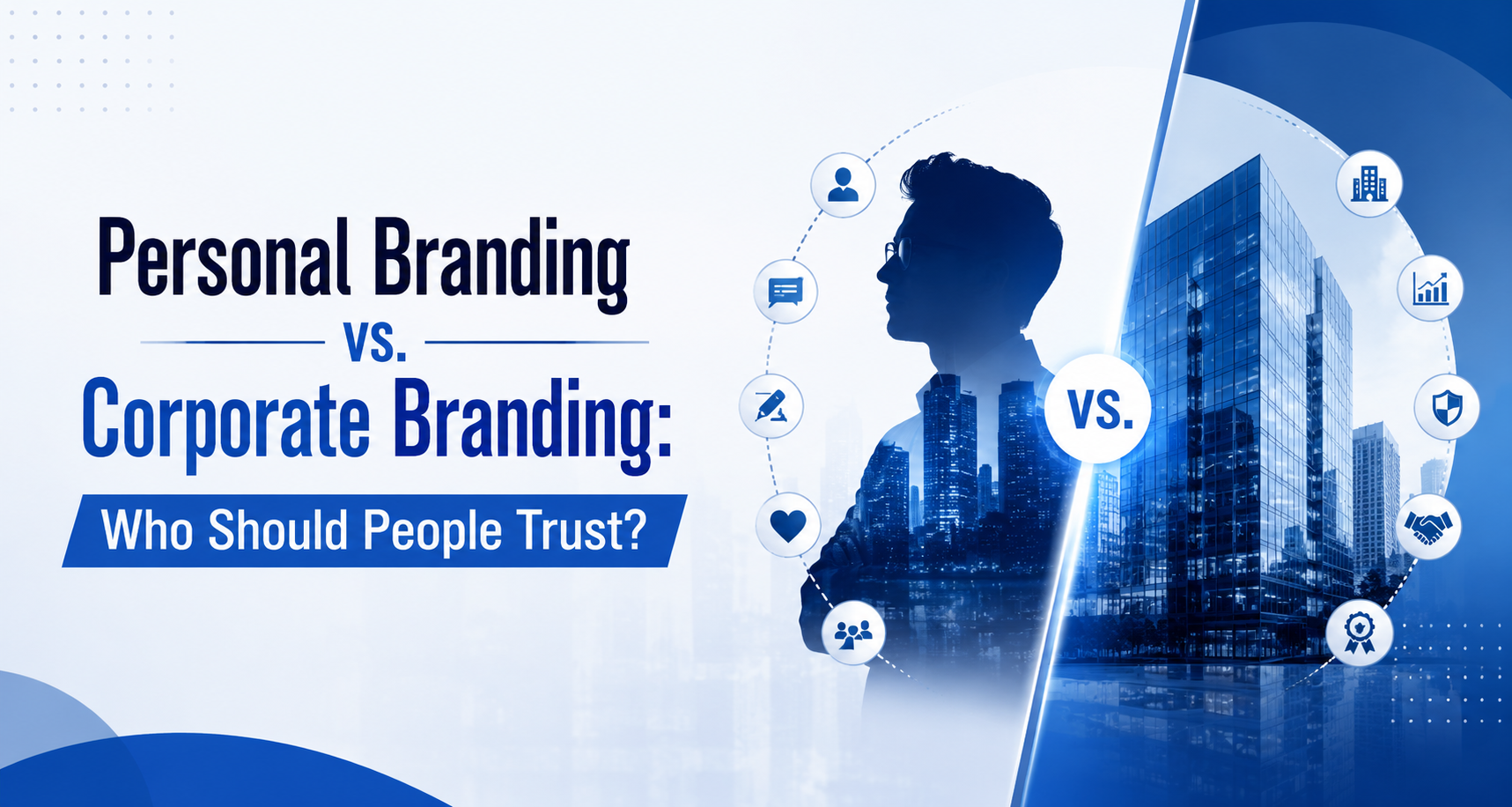
Personal Branding vs. Corporate Branding: Who Should People Trust?
A Logo Builds Recognition. A Person Builds Connection.
A company can have the perfect logo, polished website, and carefully crafted brand guidelines.
But when people want to know who they can trust, they often look for something more human.
A face.
A voice.
A point of view.
A story.
That is where personal branding enters the picture.
Today, businesses are no longer competing only on products, pricing, or services. They are competing for attention, trust, credibility, and connection.
And that raises an important question:
Should your brand speak through a company, or through the people behind it?
The answer isn't one or the other.
The strongest brands know how to make personal branding and corporate branding work together.
Corporate Branding: The Brand Behind the Business
Corporate branding is how a company presents itself to the world.
It includes everything from:
Logo and visual identity
Brand colours and typography
Website and digital presence
Brand voice and messaging
Products and services
Customer experience
Reputation and positioning
Corporate branding answers:
“What does this company stand for?”
A strong corporate brand creates consistency.
Whether someone discovers the company through LinkedIn, Google, Instagram, a website, or a sales presentation, the experience should feel recognisably the same.
That consistency builds brand awareness and credibility over time.
But there is one limitation.
A company logo cannot have a conversation.
People can.
Personal Branding: The Human Side of Business
Personal branding is the reputation and identity an individual builds around their expertise, personality, experience, and perspective.
It answers a different question:
“Why should I listen to this person?”
A strong personal brand can help professionals become:
Recognisable experts
Trusted voices
Industry thought leaders
Community builders
Credible representatives of their companies
This is particularly powerful on platforms such as LinkedIn, where audiences often engage more deeply with people and perspectives than corporate announcements.
A corporate page might say:
“We provide innovative digital solutions.”
A person might say:
“Here is the mistake I see businesses making when they approach digital transformation, and what they should do instead.”
The second creates conversation.
And conversation creates connection.
Personal Branding vs Corporate Branding: What's the Difference?
Personal Branding | Corporate Branding |
Built around a person | Built around a company |
Personal voice | Consistent brand voice |
Expertise and perspective | Products, services and positioning |
Builds individual trust | Builds organisational credibility |
Flexible and conversational | Structured and consistent |
Strong for thought leadership | Strong for brand recognition |
The difference isn't about which one is better.
It's about what each one is designed to achieve.
The Real Power? Use Both.
Imagine a technology company.
Its corporate brand communicates:
Innovation. Expertise. Reliability.
Now imagine the people behind that company sharing:
Industry insights
Lessons from projects
Expert opinions
Behind-the-scenes experiences
Practical advice
Emerging trends
Suddenly, the corporate brand has a human voice.
The company builds recognition.
The people build relationships.
Together, they create something much stronger:
A brand people recognise, and people trust.
Why Personal Branding Is Becoming More Important
Digital audiences are exposed to thousands of marketing messages every day.
Another corporate announcement can easily disappear in the feed.
A strong personal perspective is harder to ignore.
People want to know:
Who is behind the business?
What do they believe?
Do they understand my problem?
Can I trust their expertise?
This is why personal branding has become an important part of modern content marketing, social media marketing, and thought leadership.
The goal isn't to turn every employee into an influencer.
The goal is to make expertise visible.
But Personal Branding Has a Risk
Building a personal brand can create strong visibility, but businesses should avoid making the entire brand dependent on one individual.
If all credibility sits with one person, the company may struggle when that person moves on.
That's why the smartest strategy is:
Personal voice + Corporate foundation.
The individual creates connection.
The company creates continuity.
The Best Branding Strategy Isn't “Personal vs Corporate”
It is:
Personal + Corporate.
Think of corporate branding as the house.
Personal branding is the people who make that house worth visiting.
Your corporate brand establishes:
Who you are.
Your personal brand communicates:
Why should people care?
And your content connects the two.
How Businesses Can Make Them Work Together
1. Give Experts a Voice
Encourage leaders and subject-matter experts to share genuine insights rather than simply reposting company content.
2. Keep the Brand Consistent
Personal voices can be different, but they should still align with the company's values and positioning.
3. Create Content Around Expertise
Turn knowledge into:
LinkedIn posts
Articles
Videos
Case studies
Industry opinions
Educational content
4. Let People Tell the Story
Corporate content explains what the company does.
People can explain why it matters.
5. Build Trust Before Selling
The strongest personal brands don't constantly promote.
They educate, challenge, explain, and contribute.
Sales become a result of credibility, not the entire purpose of content.
The Bottom Line
Corporate branding makes your business recognisable.
Personal branding makes your expertise memorable.
One builds the identity of the organisation.
The other builds the human connection behind it.
So don't ask:
“Should we focus on personal branding or corporate branding?”
Ask:
“How can our people make our corporate brand more human?”
Because in a crowded digital world, people may remember your logo.
But they remember the person who made them think.
And that is where powerful branding begins.