Why Brand Visibility Matters More Than Ever in AI Search
VCentrix Admin
Author
Why Brand Visibility Matters More Than Ever in AI Search
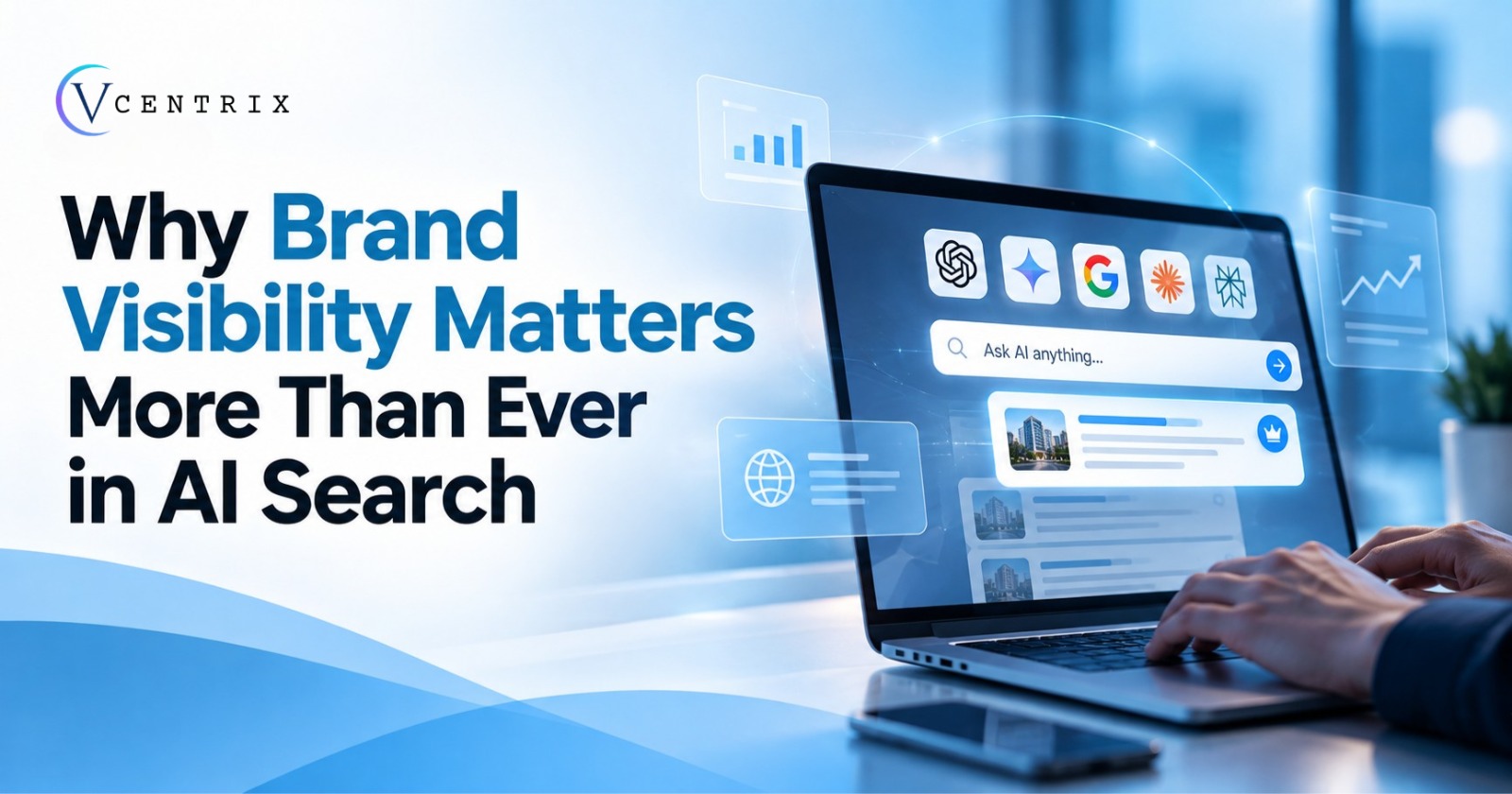
For two decades, search visibility meant one thing: ranking on page one. Today, a growing share of people never reach page one at all. They ask ChatGPT, Gemini, Perplexity, or Google's AI Overviews and take the answer as given. In that world, the brands that get named inside the answer win attention, and the rest are invisible, however well they rank.
The Click Is No Longer the Unit of Search
SparkToro's 2026 study found that 68.01% of US Google searches between January and April 2026 ended without a click, up about 7.5 points since 2024. AI features sharpen the trend. Industry analyses put the zero-click rate far higher when an AI Overview appears, and as high as 93% inside Google's AI Mode. Figures differ between studies because of different data sources and methods, but they point the same way.
The audience is also moving. ChatGPT reported roughly 900 million weekly active users in early 2026, up from about 400 million a year earlier, and Gemini-powered AI Overviews reach over 2 billion people a month. Discovery is happening inside answers, not on results pages.
Ranking Is Not the Same as Being Recommended
A strong Google ranking no longer guarantees a place in AI answers. Ahrefs data reported in 2026 shows the share of AI Overview citations coming from top-10 pages falling from about 76% in mid-2025 to about 38% in early 2026. Another Ahrefs analysis found only about 8% of ChatGPT citations overlap with Google's top organic results for the same query.
The new question for brands is not "Where do we rank?" but "Are we mentioned, and how are we described?"
What Drives Visibility Inside AI Answers
The research so far points to signals that look more like brand building than classic SEO:
Brand awareness. A 2026 review by 5W Research found brand search volume to be the strongest known predictor of AI citation likelihood, with a 0.334 correlation, stronger than backlinks.
Mentions across the web. Ahrefs found that unlinked brand mentions correlate about three times more strongly with AI Overview visibility than backlinks do, across 75,000 brands studied.
Third-party coverage. Reported 2026 data suggests a large majority of AI citations, around 84% in one analysis, come from earned media rather than a brand's own pages. Being featured on trusted publications, review sites and community platforms matters.
Quotable, specific content. Research on generative engine optimisation finds that adding statistics, credible quotations and clear source citations can lift visibility in AI answers by up to 40%.
Treat the exact percentages as directional. Methods vary, and this field is changing quickly, but the pattern is consistent: reputation travels further than keywords.
Zero-Click Does Not Mean Zero Impact
When an AI answer names your brand, the benefit often arrives later as a branded search, a direct visit, or a shortlist inclusion, with no click at the moment of the answer. That makes measurement harder, and it means traditional traffic reports understate what is happening. Brands need to watch mentions, citations, and branded search lift alongside clicks.
What Brands Should Do Now
Audit your AI presence. Ask the major assistants the questions your customers ask. Note whether you appear, how you are described, and which competitors are named instead.
Build mentions beyond your own site. Pursue PR, expert commentary, partnerships, reviews, and community participation on platforms AI tools draw from.
Make content easy to quote. Lead with clear answers, include original data and cite credible sources. Structured pages with FAQs and plain language are easier for AI systems to extract.
Keep your facts consistent. Names, positioning, pricing, and product descriptions should match across your website, profiles, and listings, so AI systems have one clear story to repeat.
Invest in brand demand. Campaigns that make people search for you by name feed the signals AI systems appear to trust most.
Update your metrics. Add AI mention share, citation tracking, and branded search growth to your reporting.
AI search compresses the journey. Fewer options are shown, fewer clicks are made, and the answer carries more weight. Brands that are well known, widely mentioned, and clearly described will be the ones AI recommends. The work of earning that position has to start before the question is asked.