Digital Marketing Trends That Will Shape 2026
VCentrix Admin
Author
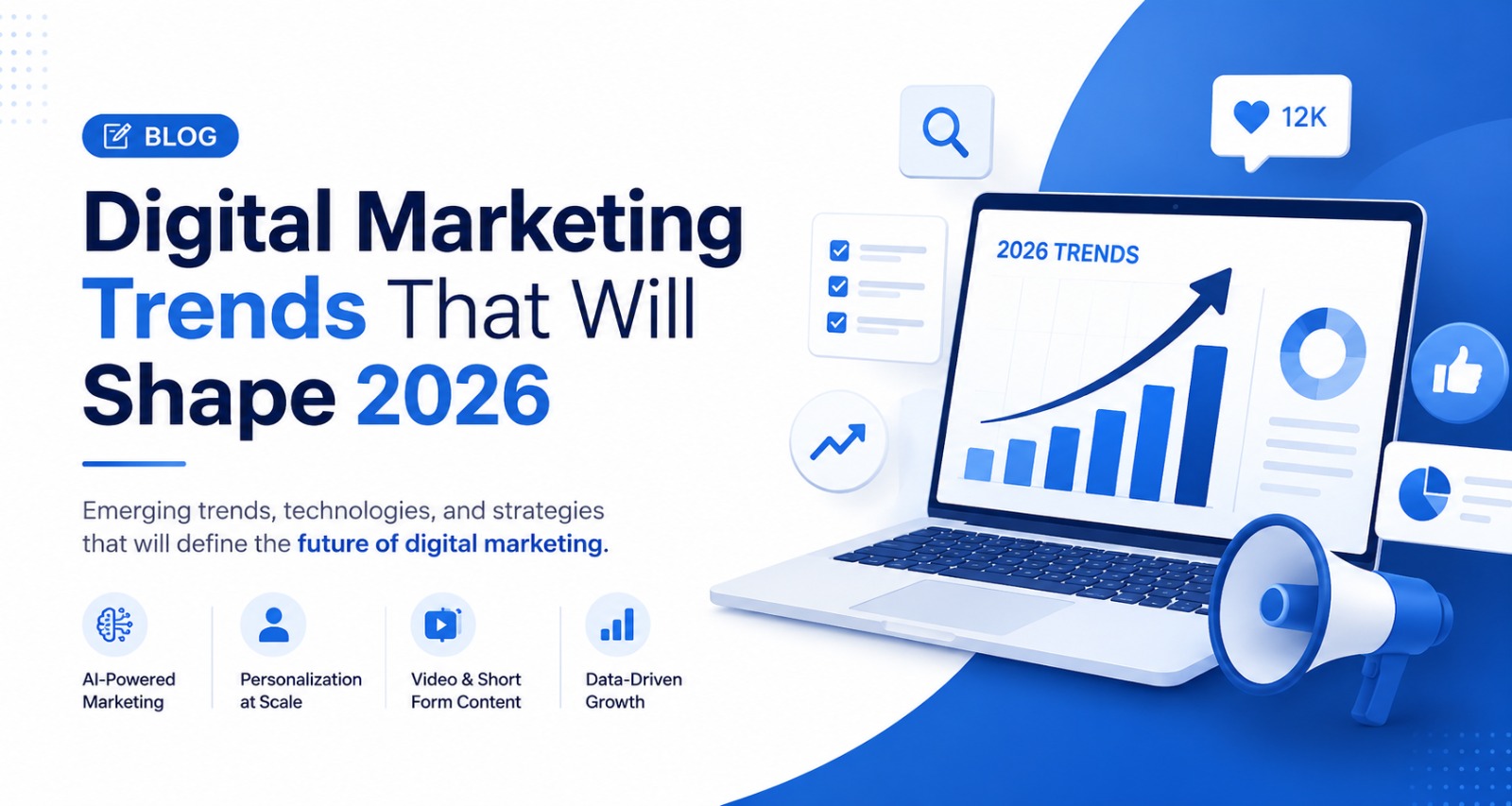
Digital marketing is no longer changing one channel at a time. Search, social media, advertising, content, websites, and artificial intelligence are increasingly connected, and businesses that treat them as separate activities may struggle to keep up.
In 2026, the focus is shifting from simply generating traffic and impressions to building discoverability, trust, meaningful engagement, and measurable growth.
Here are the key digital marketing trends businesses should be paying attention to in 2026.
1. AI Is Changing How People Search
One of the biggest changes in digital marketing is the evolution of search.
People are no longer relying only on traditional keyword searches and lists of blue links. AI-powered search experiences are making it easier to ask longer, more conversational questions and receive synthesized answers.
Google has continued expanding AI Overviews and AI Mode, creating new ways for users to explore information and discover websites.
For businesses, this means SEO is becoming about more than ranking for a keyword.
Your content needs to clearly answer real questions, demonstrate expertise, provide useful information, and make it easy for search engines and users to understand your brand.
What businesses should do:
Continue investing in strong SEO fundamentals while creating original, useful content that directly addresses customer needs.
2. SEO Is Moving Beyond Traditional Rankings
SEO is not disappearing; it is evolving.
Google's current guidance states that the same foundational SEO practices remain relevant for AI search experiences. Websites still need to be crawlable, technically sound, useful, accessible, and supported by strong content.
At the same time, businesses need to think about visibility beyond traditional search results.
This includes:
Search results
AI-generated answers
Local search
Video search
Image search
Product discovery
Brand mentions across relevant platforms.
The goal is no longer to rank first. The goal is to become a trusted source wherever your audience is searching for answers.
3. Original Content Will Matter More Than Content Volume
AI has made content production faster than ever. But faster content does not automatically mean better marketing.
As businesses produce more AI-assisted articles, social posts, videos, and landing pages, generic content becomes easier to recognize, and easier to ignore.
Google continues to emphasize helpful, reliable, people-first content rather than content created primarily to manipulate search rankings.
In 2026, businesses should focus less on asking:
“How much content can we publish?”
And more on:
“What can we say that is genuinely useful, original, or different?”
Original research, expert opinions, customer insights, case studies, examples, data, and first-hand experience can help brands stand out.
4. AI Will Become a Marketing Workflow, Not Just a Tool
AI is moving beyond experimentation.
Instead of using AI only to generate captions or brainstorm ideas, marketing teams are increasingly using it throughout their workflows, from research and content planning to analysis, personalization, automation, and reporting.
The opportunity is not to replace marketers with AI.
It is to help marketers spend less time on repetitive tasks and more time on strategy, creativity, experimentation, and decision-making.
A strong 2026 workflow may look like:
AI-assisted research → Human strategy → AI-assisted production → Human review → Performance analysis → Continuous optimization
The human layer remains important because good marketing still requires context, positioning, creativity, and judgment.
5. Personalization Will Become a Competitive Advantage
Customers increasingly expect brands to understand what they need and when they need it.
Generic messaging can make it difficult for businesses to stand out, especially in crowded industries.
Personalization can appear across the entire customer journey:
Website experiences
Email campaigns
Advertising
Product recommendations
Landing pages
Lead nurturing
Retargeting
Social content
The important shift is from personalization for the sake of personalization to relevant experiences based on real customer intent and behavior.
Businesses that connect their data, content, and marketing channels can create more meaningful customer journeys.
6. Short-Form Video Will Continue to Drive Attention
Video remains one of the most effective ways to communicate quickly in crowded digital environments.
But the opportunity in 2026 is not simply to create more videos.
Brands need to create videos with a clear purpose.
Educational videos can answer customer questions. Product videos can demonstrate value. Behind-the-scenes content can build trust. Founder-led content can create familiarity. Short-form storytelling can make complex ideas easier to understand.
The strongest brands will treat video as part of their broader content strategy rather than as an isolated social media activity.
7. Performance Marketing Will Become More Creative
Paid advertising is becoming increasingly automated.
Platforms are handling more of the targeting, bidding, and optimization process. That means creative quality and messaging can become even more important differentiators.
Businesses should focus on testing:
Hooks
Headlines
Visual concepts
Offers
Formats
Landing pages
Calls to action
Audience-specific messaging
The future of performance marketing is not simply “spend more to get more.”
It is about building a system where creative, media, landing pages, analytics, and conversion strategy work together.
8. First-Party Data Will Become More Valuable
As privacy expectations and digital platforms continue to evolve, businesses need to build stronger relationships with their own audiences.
First-party data, information customers voluntarily share with a business, can support better segmentation, personalization, email marketing, remarketing, and customer retention.
Instead of depending entirely on rented audiences from advertising platforms, businesses should build assets they control.
That could include:
Email subscribers
Customer databases
Website behavior data
CRM information
Purchase history
Lead preferences
Loyalty programs
The more effectively businesses understand their own customers, the more intelligently they can market to them.
9. Marketing Measurement Will Shift From Vanity Metrics to Business Outcomes
Likes, impressions, clicks, and follower counts can be useful indicators, but they do not always tell you whether marketing is contributing to business growth.
In 2026, businesses should increasingly connect marketing activity to meaningful outcomes such as:
Leads → Qualified Leads → Opportunities → Revenue → Customer Lifetime Value
This requires better tracking, cleaner analytics, and stronger alignment between marketing and sales.
The question should move from:
“How many people saw our campaign?”
to:
“What did this campaign contribute to the business?”
10. The Biggest Trend: Integrated Marketing
Perhaps the most important trend is not a new platform or AI tool.
It is integration.
SEO cannot operate completely separately from content. Paid advertising depends on strong creative and landing pages. Social media influences brand discovery. Email supports retention. Websites convert attention into action. Analytics connects everything.
Businesses that connect these functions can make better decisions because every channel contributes to the same growth system.
That is where digital marketing is heading in 2026: less disconnected activity and more connected growth.
What Should Businesses Do Next?
You do not need to adopt every new marketing trend at once.
Start by identifying where your current growth system has the biggest gap.
If your website is not generating enough leads, improve conversion and SEO. If your ads are becoming expensive, revisit your creative and funnel. If your content is getting attention but not building trust, strengthen your positioning. If your team spends too much time on repetitive work, explore automation.
The businesses that win in 2026 will not necessarily be the ones using the most tools.
They will be the ones that combine technology, creativity, data, and strategy to create a better customer experience, and measure whether it actually drives growth.
Final Takeaway
Digital marketing in 2026 is becoming more intelligent, more automated, and more interconnected.
AI is changing search. SEO is expanding beyond traditional rankings. Content quality is becoming more important. Paid media is becoming more creative. Personalization and first-party data are becoming increasingly valuable. And measurement is moving closer to real business outcomes.
The opportunity is not to chase every trend.
It is to understand which changes matter to your audience, and build a marketing system that is ready to adapt.
The future of digital marketing isn't about doing more. It's about making every part of your marketing work better together.