
From Lead Generation to Revenue: Building a Full Funnel Marketing System
See how a connected full-funnel marketing system turned scattered lead generation into predictable revenue, with the strategy, steps, and results behind it.
Industry
Technology & Social Media
Service
Marketing Strategy
Challenge
A growing consumer brand generated leads through paid ads, Instagram, and email, but each channel operated in isolation. One month centered on a launch, the next on a giveaway, then a discount push. Leadership could see leads coming in but not which efforts turned into revenue.
No shared goal: Campaigns had separate objectives, none tied to revenue or customer retention.
Unqualified leads: Every contact was treated the same, so follow-up was slow and sales time was spread thin.
Vanity metrics: Reports tracked clicks, form fills, and follower counts, not customers won.
No feedback loop: Sales results never informed the next campaign, so mistakes repeated.
Solution
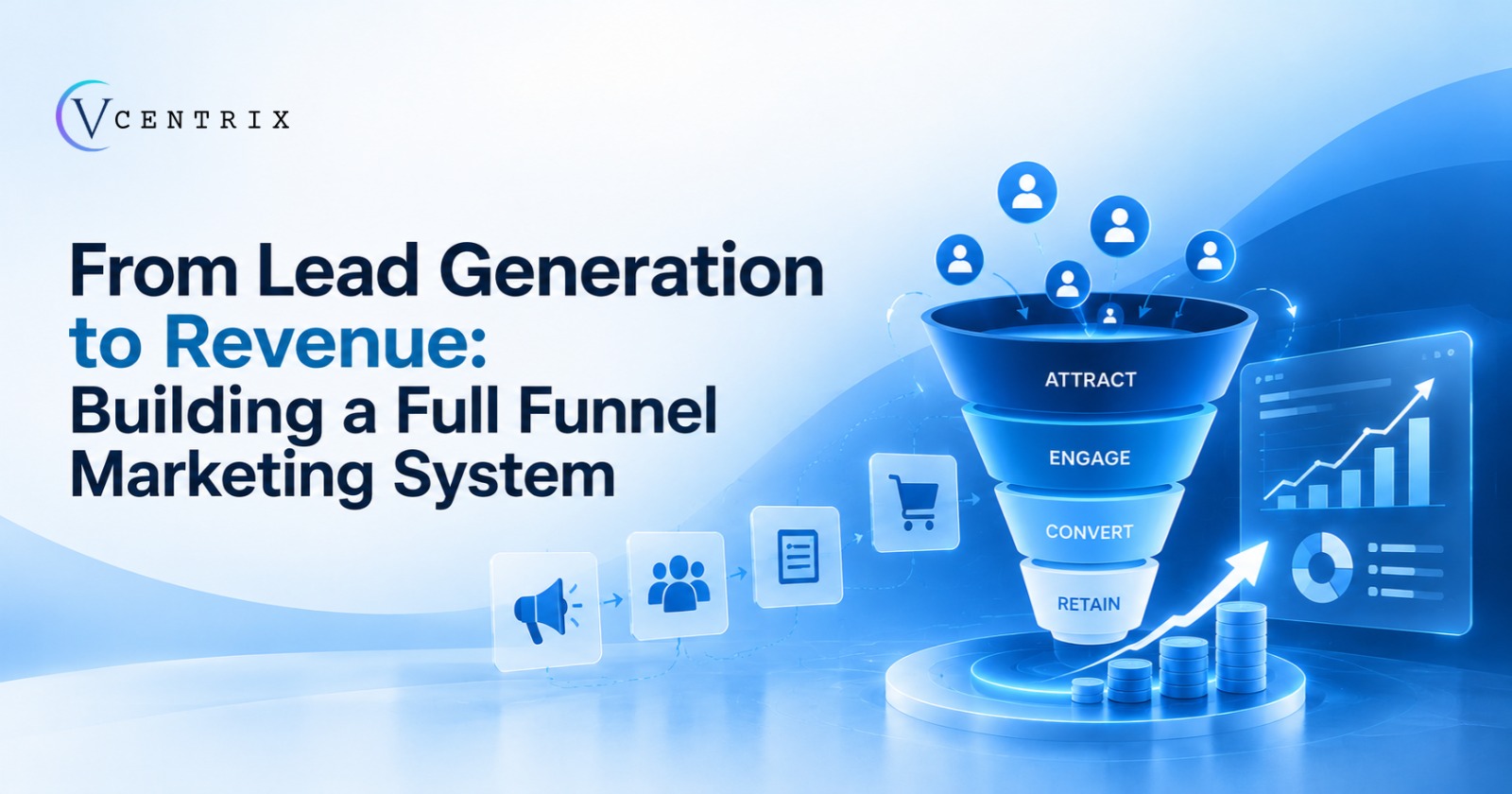
Replace scattered campaigns with one full-funnel system: a single customer-journey model, a defined role for each channel, and a short set of metrics tied to every stage. Every campaign must serve a funnel stage and be measured against it.
Awareness: Social content and paid ads
Capture and nurture: Landing pages, lead magnets, and email
Conversion and retention: Sales follow-up, offers, and repeat purchase flows
Process
Audit and baseline: Collect every campaign, lead source, and data point in one place, and record what each was meant to achieve versus what it delivered.
Build the funnel model: Map the journey from first touch to repeat purchase, assign each channel its role, and agree with sales on what a qualified lead is.
Set the metrics: Track reach and new-audience share (awareness), conversion rate and cost per qualified lead (capture), lead-to-opportunity rate (nurture), cost per acquisition and close rate (conversion), and repeat purchase rate (retention).
Structured testing: Change one variable at a time (offer, hook, CTA, send time) and run each test long enough to be meaningful.
Review and reallocate: Hold a weekly performance check and a monthly review to decide what to scale, fix, or stop.
Results
Planning shifted from "how many leads can we get?" to "which stage of the funnel needs support?" Decisions drew on evidence, budget shifted toward channels that produced customers, and every channel reported against a single framework tied to revenue.
Before publishing as real work, add only verified figures:
Change in qualified leads or the primary KPI over a stated period
Change in cost per acquisition or lead-to-customer conversion rate
Growth in revenue, retention, or repeat purchases
A genuine client quote, if one exists
Key takeaway: Strategy comes before tactics, measure what drives decisions, and treat learning as the asset that improves every future campaign.